By Dr. Jessica Sapp | 09/01/2026
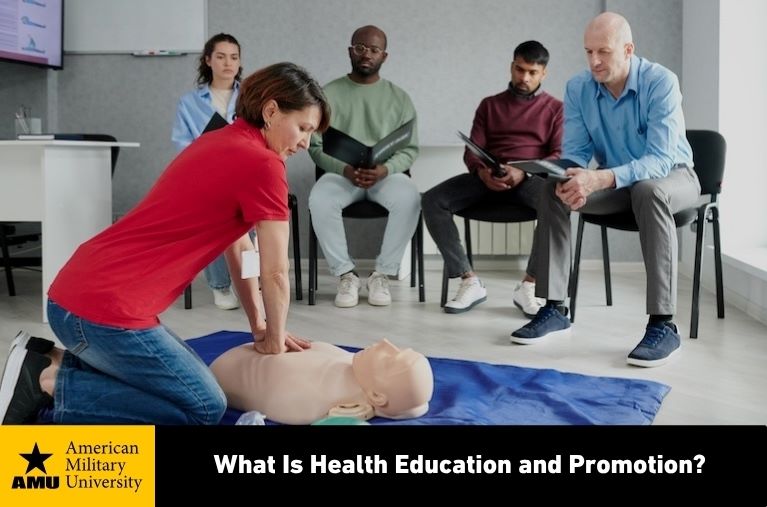
Health education and health promotion are complementary public health strategies designed to improve public well-being. These strategies empower people to make healthier choices and alter their environments to support those choices.
However, they are different in scope. Health education focuses on providing the knowledge and skills needed by individuals to adopt healthy behaviors. By contrast, health promotion acts on a broader scale by addressing the social, environmental, and political factors that influence public health and health equity.
In simpler terms, health education teaches people what they can do to be healthier, and health promotion enables people to increase control over their own health. These efforts enable people to have a better quality of life.
The History of Health Education and Promotion in the United States
The United States has long been a leader in formalizing public health, health promotion, and health education. The American Public Health Association® (APHA®) was founded in 1872, making it one of the oldest public health associations in the world. In 1922, APHA established public health education and health promotion initiatives.
In its early years, APHA focused heavily on sanitation, communicable diseases, and access to healthcare. But it wasn’t until the 1980s when there was a major shift in health education and promotion.
Health promotion programs began to shift from healthcare treatment to disease prevention and health knowledge. According to the Centers for Disease Control and Prevention (CDC®), these efforts led to the publication of the first Healthy People initiatives in 1980.
The CDC also notes, “The Healthy People initiative is designed to guide national health promotion and disease prevention efforts to improve the health of the Nation. The U.S. Department of Health and Human Services (HHS) has released Healthy People every decade since 1980. The initiative identifies science-based objectives with targets to focus and motivate action and to monitor progress.”
How Workplace Wellness Programs Support Health Education
According to an Illinois Workplace Wellness study, “workplace wellness programs cover over 50 million U.S. workers and are intended to reduce medical spending, increase productivity, and improve well-being.” Companies like Johnson & Johnson®, Xerox®, and Verizon® were among the innovators that invested in health education and promotion programs for their employees.
Since the early inception of workplace wellness, many businesses, nonprofit organizations, and government agencies have implemented health education programs for employees. Now, health education and promotion programs span across numerous industries, expanding access to health programs to millions of workers.
How Technology Aids Health Education and Promotion
Through advanced technology and a digital environment, health education and promotion programs have reached more communities. For example, peer educators and other healthcare specialists can promote health through social media platforms or online videos, which has been helpful in teaching health topics to diverse populations.
Having access to cell phones and mobile applications has equipped individuals with many resources for health promotion. For instance, you can improve your knowledge by learning about healthy lifestyles that encourage you to make healthy behavior changes. You can take some health screenings, too, right on your smartphone.
Where Health Educators Work
Health education and promotion is a specialized career field, but health educators are not limited to working in healthcare industry jobs. There are many settings that are not in the health industry but offer health education programs, such as:
- Schools
- Colleges
- Businesses
- Community organizations
- Government agencies
For example, I started my public health career as a health educator at the National Aeronautics and Space Administration (NASA®) Kennedy Space Center. Because NASA is a government agency dedicated to aeronautics and space, many people expect NASA to offer only engineering jobs.
However, NASA offers a comprehensive wellness program. This program includes:
- Health and wellness education
- Fitness centers
- Employee assistance programs
- Occupational health education
- Health training
How to Become a Health Education Specialist
If you enjoy helping people to get healthy, stay healthy, and live healthier lives, working as a health education specialist or community health worker can be a satisfying career choice. It enables you to use your health education and promotion skills and health services knowledge to:
- Prevent disease
- Protect the health of patients and their families
- Curb infectious outbreaks
For instance, providing education on proper diet and regular exercise can be useful in helping people avoid medical conditions such as Type 2 diabetes and heart disease. Similarly, you can cover other topics such as disease prevention, mental health, and stress management.
In addition, there is the opportunity to help community organizations and other health professionals resolve population health disparities with greater effectiveness. Furthermore, you can become an advocate for disadvantaged populations in getting the resources needed to solve health problems (such as grants) and improve access to fresh food and medical care.
Most health education and promotion jobs require at least a bachelor’s degree from an accredited institution. Once you have received your bachelor’s degree, you are eligible to take the Certified Health Education Specialist (CHES®) exam. The CHES certification is nationally recognized and verifies your competency in health education standards.
Some public health students also choose to seek a master’s degree in public health. This degree enables them to seek leadership opportunities, provided that they have sufficient knowledge and experience in public health.
The Master of Public Health at AMU
For adult learners interested in studying public health, American Military University (AMU) has an online Master of Public Health. For this degree, students can enroll in courses that cover public health program planning and evaluation, public health in America, and health policy. Other educational offerings include public health and environment, research methods in public health, social and behavioral aspects of health, and ethical issues in public health.
This MPH has also received specialty accreditation from Council on Education for Public Health® (CEPH®). (Note: Please check APUS’s accreditation page for details on the current accreditation status.) This accreditation ensures that the program has been rigorously checked for high academic quality by higher education professionals.
For more details, visit AMU’s health sciences degree program page.
Note: This program has specific admission requirements.
American Public Health Association® and APHA® are registered trademarks of American Public Health Association.
Centers for Disease Control and Prevention® is a registered trademark of U.S. Department of Health and Human Services.
Johnson & Johnson® is a registered trademark of Johnson & Johnson.
Xerox® is a registered trademark of Xerox Corporation
Verizon® is a registered trademark of Verizon Trademark Services, LLC.
NASA® is a registered trademark of National Aeronautics and Space Administration
CHES® is a registered trademark of National Commission for Health Education Credentialing, Inc.
Council on Education for Public Health® and CEPH® are registered trademarks of Council on Education for Public Health.
Dr. Jessica Sapp, a faculty member within the School of Health Sciences at AMU, has over 20 years of experience in public health working in various environments including government, hospitals, health insurance, community, international, corporate, and academia. She is the author of various books, including “Your Healthcare Job Hunt: How Your Digital Presence Can Make or Break Your Career.”
Dr. Sapp has a B.S. in Health Science Education from the University of Florida and an MPH in Health Promotion, Education and Behavior at the University of South Carolina. She earned her Doctor of Public Health in Health Policy and Management from Georgia Southern University.