By Dr. Brittany Jacobs | 12/11/2025
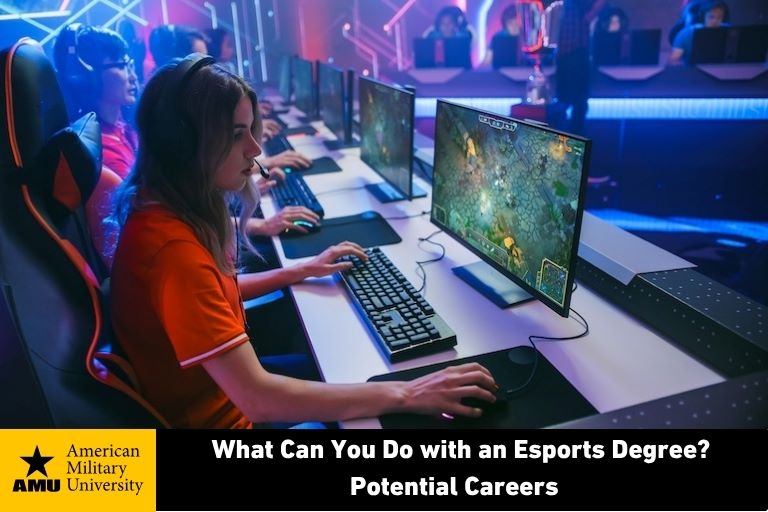
Esports first emerged in South Korea and grew globally during the 1990s as the internet revolution took hold. In 2024, the esports market was valued at $2.13 billion according to Grandview Research.
Despite its market value, however, esports continues to evolve. For instance:
- Esports governance structures are growing and changing.
- Esports are being integrated into the varsity sporting landscape.
- Esports degree programs have emerged at different educational institutions.
Are Esports Degree Programs Legitimate?
As a relatively new field of study, some people wonder if pursuing an esports degree is a legitimate endeavor. Esports – also known as competitive video gaming – is much like sport management in the late 1960s.
This industry involves a culmination of many fields, including:
- Digital media
- Business
- Technology
- Psychology
Naysayers argue that one might be better served by earning a specific degree in any of those fields. But the growth of esports programs highlights their viability. There are now nearly 200 academic institutions that offer an esports credential, whether that’s in the form of an academic degree, certificate, or concentration.
Nonetheless, many parents and guardians worry that an esports program simply teaches students to play video games when in fact, the playing of video games comprises an incredibly small part of a curriculum.
Instead, esports degree programs facilitate business acumen, critical thinking, and digital literacy. The great thing about studying esports is that even if you choose to work in a different field, you will have gained numerous transferrable skills from your esports degree.
Why Are Universities Offering Esports Degrees?
Universities have begun to offer esports degrees for two major reasons: market demand and industry need. Approximately 85% of teens play video games, according to Statista.
With 42.9 million teens in the United States alone, there is a massive opportunity to leverage students’ interests in video gaming into an educational pathway. Similarly, today’s digitally native students are looking for different degree programs than their predecessors, and universities must be willing to adapt to meet student demand.
The Professionalization and Growth of the Esports Community
In addition to the significant interest in video games from the traditional college-aged population, the professionalization of esports has led to the need for highly trained, qualified professionals in the esports community. Historically, there has been a start-up mentality in esports where people in esports careers have bootstrapped their skills, learning along the way.
But as the field continues to grow and become more professional, a need for additional expertise has arisen. Creating degree programs in esports allows graduates to emerge with a foundational set of skills that can immediately impact the esports industry.
Typical Esports Career Opportunities
Esports is unique, and esports careers encompass various areas. For instance, esports is connected to publishers who hold the rights to all esports titles, meaning that they are intrinsically linked to any competition that utilizes their game.
Esports is comprised of:
- Youth and recreational gaming
- Collegiate gaming
- Professional gaming
- Game development
However, it also goes well beyond playing or building video games. Esport careers also includes areas such as:
- Digital media
- Shoutcasting
- Marketing
- Management
- Sponsorship
- Finance
- Coaching
- Technology
With so many levels of play and areas of emphasis, the potential careers in esports are quite varied. Potential esports jobs include:
- Event planner or tournament organizer
- Broadcaster or livestream host
- Content creator or media producer
- Entrepreneur
- Player agent
- Esports coach, manager, or analyst
- Game designer or game developer
- Health and wellness expert
- Journalist or communications manager
- Educator
- Social media manager or brand manager
Event Planner or Tournament Organizer
When you're thinking about esports events, the first thing that comes to mind is probably organized tournaments. To manage such events, a team of event and tournament operations professionals is responsible for coordinating logistics from venue contracting to the look and feel of the esports tournament. If you enjoy managing details and seeing your work come to fruition through the eyes of fans and competitors, being an event organizer might be a career field for you.
Broadcaster or Livestream Host
Often a requisite of a high-quality event, shoutcasting and live-streaming bring the audience to the event to watch teams compete. From on-screen personalities delivering play-by-play or color commentary to back-end production and player interviews, there are myriad jobs in this area of esports.
Content Creator or Media Producer
Every team, league, and player wants to build a personal brand to increase their celebrity and revenue. Esports content producers typically tell stories and edit video and photos. They also track analytics to ensure high audience engagement and gain insights into creating engaging content. These professionals work through various mediums, including YouTube®, TikTok®, and Twitch®.
Entrepreneur
As the esports marketplace continues to grow, the need for new companies will follow suit. Esports entrepreneurship allows business owners to determine what gaps exist in the esports industry, and filling those gaps can become a profitable endeavor.
However, entrepreneurs in this area will need to understand fundraising, management, advertising, and marketing. In addition, they must comprehend how to scale the business as it grows.
Player Agent
Esports agents focus on the management of player contracts, name, image, and likeness usage, and sponsorship deals. These agents have a deep knowledge of esports, which allows them to manage player disputes and new talent. Every professional player needs an agent to facilitate their successes and ensure fair, equitable compensation.
Esports Coach, Manager, or Analyst
Esports teams require esports management, which can include roles like a professional, collegiate, or high school team's coach, manager, or analyst.
The coach possesses skills such as player development and strategy creation, while the team manager is better suited to operations management. The team analyst analyzes player data and performance and offers insights to aid improvement.
Game Designer or Game Developer
These esports career paths require a more specialized degree, such as computer science, game development, or software engineering. Understanding game design and development can lead to roles with studios that create various types of games, ranging from mobile gaming to virtual reality and augmented reality (VR and AR).
Health and Wellness Expert
An area currently seeing significant growth in the esports space is health and wellness. Formerly, many people had the perception that esports players led unhealthy, sedentary lifestyles.
Today, esports athletes devote themselves to both mental and physical fitness regimes to ensure they are in peak condition for optimal performance. Careers in this area can also relate to nutrition, psychology, and injury prevention.
Journalist or Communications Manager
Like all entertainment businesses, an audience always wants the inside scoop on the happenings of their favorite esports players and teams. Esports journalists may write articles for esports news outlets like Esports Insider.
They can also serve as communications managers. For instance, they can conduct interviews with players and cover tournaments within a specific league or conference.
Educator
Education is another major growth area for esports. The global participation of over 600 million people under the age of 18 in esports highlights this booming industry. From teaching esports in schools or youth programs or developing curricula or programs, the opportunities for a career in esports education will continue to grow.
Social Media Manager, Brand Manager, or Community Manager
The opportunity to promote esports teams, players, and events provides several exciting career opportunities. Examples include such as social media manager, brand manager, or community manager who help to promote the goals of marketing campaigns.
This esports sector can offer many opportunities to work closely with well-known external brands, like Visa® or Red Bull®. By partnering with well-known companies, managers can improve their team’s connection with esports audiences and enhance fan engagement.
Key Considerations for an Esports Career Path
Working in esports is a dream job for many people. But with careers that fall into the “dream job” category, there will be many applicants for a role. Holding a degree in esports, particularly combined with real-world esports experience, can help set your application apart in a competitive esports market.
Have a Broad Base of Skills
With smaller teams or new organizations, a single role may require an employee to wear many hats. For example, a marketing manager may manage social media, public relations, and sponsorship. Having a broad base of skills and esports experience can be useful for prospective job candidates in the esports industry.
Be Sure to Network
The esports industry is a relatively small, tight-knit community. Consequently, your network can play a key role in supporting your career prospects.
Build your network through event attendance and participate in specific gaming communities. Volunteer for events and seek internships. By leveraging the network of your colleagues and faculty, you can help ensure that your resume is reviewed or get recommendations for new career opportunities.
The Value of an Esports Degree
With an esports degree, you can gain valuable, transferrable skills in many areas, such as marketing, finance, and broadcasting. No matter where your interests lie in esports, pursuing an esports degree will provide you with a solid foundation to aid your future career path.
The Bachelor of Science in Esports at AMU
For students interested in studying different areas of esports and improving their knowledge, American Military University (AMU) provide an online Bachelor of Science in Esports. For this degree program, students can learn about the business of esports, esports event and facility management, and esports player development. Other courses include esports media and production and policy regulations and the esports ecosystem.
This bachelor’s degree in esports also offers an externship in esports. This course allows students to gain valuable real-world experience, which is a gold standard in the esports industry.
Also, this B.S. degree has specialty accreditation from the Commission on Sport Management Accreditation (COSMA®). This accreditation demonstrates that the program has been carefully examined for high academic standards.
To learn more about this bachelor’s degree in esports, visit AMU’s health sciences degree program page.
YouTube is a registered trademark of Google, LLC.
TikTok is a registered trademark of TikTok, Ltd.
Twitch is a registered trademark of Twitch Interactive, Inc.
Visa is a registered trademark of the Visa International Service Association.
Red Bull is a registered trademark of Red Bull GmbH.
COSMA is a registered trademark of the Commission on Sport Management Accreditation.
Dr. Brittany Jacobs is an Associate Professor and Department Chair for the sports management and esports programs at American Military University. She is highly involved in the Olympic and Paralympic movements and worked for USA Rugby before returning to academia. Much of her current research centers around officials and other marginalized populations providing a direct connection to her previous coaching and officiating experiences.
Brittany holds a master’s degree in sports management from the University of Texas, a master’s degree in secondary education from the University of New Hampshire, and a B.S. in kinesiology from the University of New Hampshire, where she also played collegiate field hockey. She earned her Ph.D. in sports & exercise science with a doctoral minor in statistics from the University of Northern Colorado.