By Dr. Matthew Loux and Bryce Loux | 03/03/2026
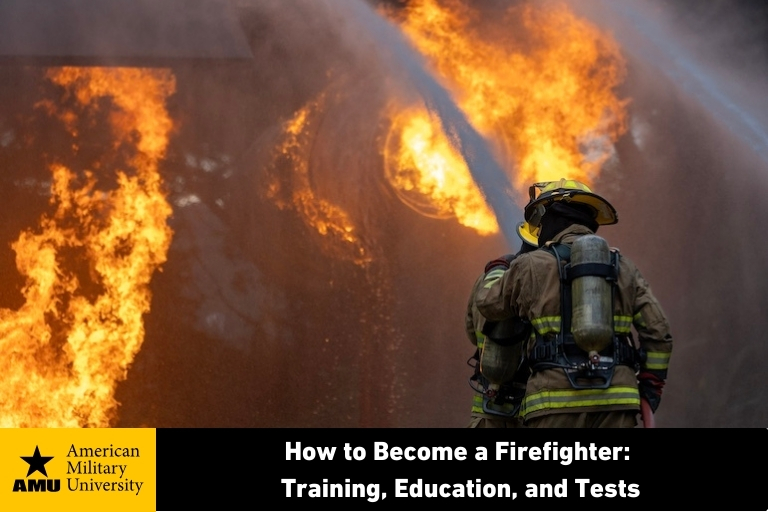
Firefighting is one of the most noble and respected professions in the world. However, it is also one of the most difficult. The men and women of the profession must put their lives on the line, sacrificing their safety to protect lives and property.
Firefighters play an important role in society, tasked with much more than putting out fires. They also:
- Rescue people from dangerous situations
- Provide medical emergency support
- Respond to dangerous situations
- Teach the community how to stay safe
If you’re curious about how to become a firefighter, you must understand the necessary requirements, including the training, lifestyle, and scope of responsibilities.
The Role of a Firefighter
The most common image that people associate with the fire service is a firefighter rescuing people and putting out a burning building. However, their responsibilities include various areas, such as:
- Fire control
- Rescue operations
- Emergency medical services
- Fire prevention instruction
Fire Control
One of the basic responsibilities of a firefighter is to put out fires. Fires are a daily occurrence in virtually every type of community, work environment, and even in remote, natural settings like forests. Firefighters possess specialized equipment and master the skills of using fire-controlling tools, such as axes, ladders, and water hoses, to bring the fire under control.
Rescue Operations
Responding to fire emergencies is not the only job full-time firefighters do. Fire pros are also the first responders for other emergencies, such as:
- Vehicle accidents
- Natural disasters such as earthquakes and tornadoes
- Collapsed buildings with persons trapped beneath them
- Water rescues, especially for people trapped in underwater vehicles
- Hazardous material spills
Emergency Medical Services
Firefighters also provide emergency services as emergency medical technicians (EMTs) or paramedics. Fires can lead to serious burns and other injuries for victims, so firefighters can respond and provide health-related assistance until an ambulance can arrive at a scene.
Fire Prevention Instruction
Another part of a firefighter’s job is to educate the community about fire prevention. For instance, firefighters may visit schools to teach young students how to prevent a fire and how safely escape from a burning building.
The Selection Process to Become a Firefighter
Becoming a firefighter is quite competitive, and applicants must meet certain educational, physical, and legal qualifications as part of the hiring process. This vetting process ensures selected candidates meet eligibility requirements to perform the job. There are some aspects of the application process that candidates must consider.
Age
Most firefighting departments have an age requirement of 18 years of age. However, some set the age limit at 21 years old.
Educational Qualifications
A high school diploma or an equivalent GED is the basic requirement. It may be helpful to take courses in science, health, physical education, and math.
Some departments prefer applicants who have a post-secondary degree, such as an associate or a bachelor’s degree. Fire science, emergency medical services, or public safety are areas of study that will be beneficial to job applicants.
The Physical Ability Test
Firefighting is physically strenuous. Anyone seeking employment as a firefighter is required to undergo demanding physical and medical evaluations to assess basic firefighting abilities.
Candidates must also pass the Candidate Physical Ability Test (CPAT), which test skills such as:
- Performing a ladder raise
- Managing the drag of hoses, other firefighting equipment, and body weight of victims
- Carrying hefty fire equipment while climbing stairs
- Pushing and pulling heavy weights
Interview with Fire Department Personnel
Many departments conduct interviews as a part of the process. During such an interview, senior personnel assess an applicant's experience, knowledge, motivations, and communication skills.
Background Checks
Applicants also must undergo a background investigation during the application period. The background check examines the candidate’s criminal history (if any), driving record, and any use of drugs or alcohol.
Driver’s License
Most departments, if not all, will require that an applicant has a valid driver’s license. Some other departments also require a candidate to have a commercial driver’s license (CDL) so they can operate fire trucks and other emergency vehicles.
Firefighter Education and Training
There are two key components to every firefighter’s career: education and training. Both components include practical elements to prepare candidates for their duties.
Fire Academy Education and Training
Prior to becoming full-fledged firefighters, recruits must master the essential skills of the profession and successfully complete fire academy training.
Standard academy training entails:
- Use of ladders, hoses, axes, and other equipment
- Participation in search and rescue missions, including ceiling breaches and stair climbing
- Awareness of fire building and structural integrity
- Adherence to safety protocols, especially involving hazardous waste
Simulations of various real-life emergencies are part of this practical training, integrated with lecture-oriented instruction. Fire academy instruction can last from 12 to 16 weeks. However, some academies offer more in-depth instruction for a period extending to six months.
Fire Academy Written Exam
Many departments require applicants to pass a written examination, often referred to as a firefighter exam, that tests candidates on essential knowledge related to fire safety, emergency procedures, and problem-solving skills. A passing score is needed to graduate the academy.
After completing the firefighter exam, applicants may be placed on an eligible list maintained by the city, which ranks applicants based on exam scores, interviews, and overall qualifications.
Applicants should carefully review all application details, note important deadlines, and track the official date of list publication. For questions, individuals are encouraged to contact their local fire department or civil service office for additional assistance.
EMT and Paramedic Training
Given that firefighters are often the first to face medical emergencies, EMT or paramedic experience can be valuable and even required by some fire departments.
Candidates who have both medical training and experience in fire suppression are typically strong applicants.
Continuous Learning
Firefighters are dedicated to lifelong learning. Many take part in continuing professional development through workshops, certifications, and specialized training to remain current on best practices, firefighting technologies, and emergency response procedures.
Tips for Aspiring Firefighters
Individuals determined to become firefighters can improve their chances by taking proactive steps to build the skills, experience, and resilience the profession demands, such as.
- Researching the requirements for the fire department
- Starting physical training in advance to pass the physical ability test
- Contacting and networking with current firefighters to get a mentor
- Gaining experience by volunteering
- Developing mental toughness
- Keeping a clean record
- Learning EMT or similar knowledge
Becoming a firefighter requires courage, resilience, and an unwavering commitment to service. Firefighters face intense physical and mental challenges, often placing themselves in harm’s way to protect lives, property, and entire communities.
Meeting the profession’s rigorous training and qualification standards demands discipline and determination, but for those firefighters who answer the call, the rewards extend far beyond the job itself. Firefighting is more than a career; it is a calling rooted in service, sacrifice, and a deep responsibility to others.
The Bachelor of Science in Fire Science Management at AMU
For interested adult learners, American Military University (AMU) offers an online Bachelor of Science in Fire Science Management. For this bachelor’s degree, students can take courses in fire prevention, fire behavior and combustion, and fire protection systems. Other courses include emergency and disaster incident command, emergency planning, and the psychology of disaster.
For more information, visit AMU’s emergency and disaster management degree program page.
Note: AMU’s B.S. in Fire Science Management has received specialty accreditation from the International Fire Service Accreditation Congress (IFSAC®). It also meets the academic requirements of the U.S. Fire Administration’s Executive Fire Officer Program.
IFSAC is a registered trademark of The Board of Regents for the Oklahoma Agricultural and Mechanical Colleges.
Dr. Matthew Loux is a criminal justice faculty member for the School of Security and Global Studies at American Military University. He holds a bachelor’s degree in criminal justice and a master’s degree in criminal justice administration from the University of Central Missouri State, a doctoral degree in management from Colorado Technical University, and a Ph.D. in educational leadership and administration from Aspen University.
Dr. Loux has been in law enforcement for more than 30 years. He has a background in fraud and criminal investigation, as well as hospital, school, and network security. Dr. Loux has researched and studied law enforcement and security best practices for the past 10 years.
Bryce Loux is an alumnus of American Public University. He holds a bachelor’s degree in fire science with a minor in criminal justice. Bryce is currently a student success coach.