By Kate Zuritsky | 02/05/2026
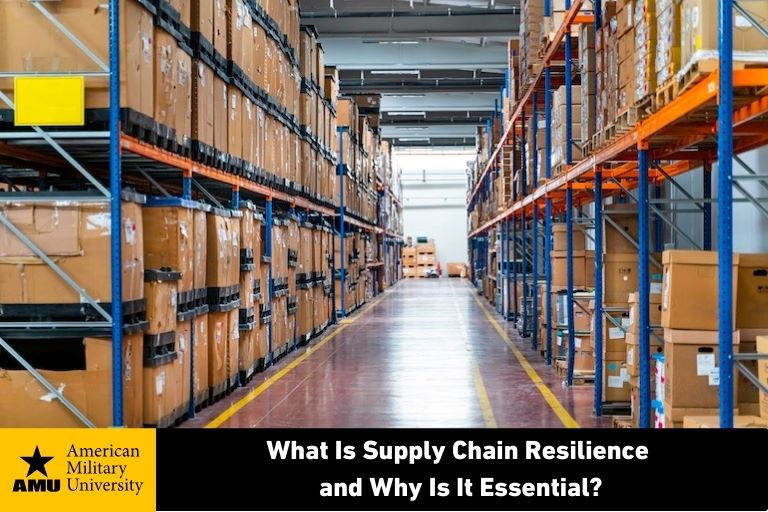
So far, the 2020s have taken us on a pretty wild ride. Between the COVID-19 pandemic, shortages of essential items, and economic uncertainty, fear and confusion quickly became our new normal.
Suddenly, factories slowed down, shipping was delayed, and everyday items like car parts, food, and computers became harder to find. As supermarket shelves cleared out and electronics and pharmaceuticals were on back order, the movement of goods from raw materials to customers slowed or suddenly stopped. These disruptions showed us just how connected and fragile modern supply networks really are.
In the wake of these events, supply chain resilience strategies have become a top priority for organizations. This resilience refers to an organization’s ability to adapt to and recover quickly from disruptions, such as pandemics or natural disasters.
When you have a resilient supply chain, products move from supplier to customer without any major hiccups. But when the system glitches, everyone suffers.
While some organizations focus on efficiency or reducing costs, the smartest supply chain strategies prioritize:
- Supply chain flexibility
- Visibility
- Readiness to tackle unexpected events
As Harvard Business Review points out, the pandemic exposed how deeply interconnected and vulnerable supply chains have become.
In today’s connected global economy, a disruption in one part of the chain can affect businesses and industries around the world. Leaders are taking a closer look at how their supply chains work. They are focusing on:
- Reducing risk
- Making customers happy
- Staying competitive
- Ensuring operations run smoothly
- Maintaining resilience
What Is Supply Chain Resilience?
The year 2021 will go down in history as one of the toughest years for global supply chains, but the challenges and hiccups didn’t end there.
In 2024 and 2025, we saw increased disruptions driven by labor shortages, extreme weather, and geopolitical uncertainty. These potential risks demonstrate the importance of designing supply chains that can handle setbacks and still run efficiently when everything goes according to plan.
So how does building resilient supply chains help businesses manage risk and boost performance? Supply chain resilience refers to how a network anticipates, adapts to, and recovers from disruptions to gain a competitive advantage. Organizations that manage resilience are in a better position to:
- Absorb shocks
- Respond quickly to change
- Continue to operate efficiently even when the system is being tested
Instead of reacting to a breakdown, resilient businesses are prepared for worst-case scenarios, allowing them to reduce the impact of future potential disruptions and increase customer satisfaction.
Why Is Supply Chain Resilience Important?
Does it seem like items are selling out faster than ever, or shipments are taking longer to arrive – even with services like Amazon Prime® or Walmart+®? You’re not imagining it. Supply chain disruptions are no longer rare or one-off events.
Businesses are now dealing with increased interruptions caused by:
- Natural disasters
- Market fluctuations
- Supplier issues
- Changing trade policies
According to a McKinsey supply chain survey, 82% of companies reported that new tariffs are affecting their activities, with some organizations seeing impacts to up to 40% of their operations. These problems make planning and risk management even trickier as global companies try to keep their products moving and their costs under control.
At the same time, shifting market conditions have made supply and demand harder to predict. Consumers can change their buying patterns at any time based on:
- Inflation
- Global events
- Sudden shifts in behavior
These demand fluctuations add pressure on supply chain operations, especially if an organization relies on scarce inventory models or has a limited number of suppliers.
Building resilient supply chains into a system can help organizations respond more quickly, adjust plans as conditions change, and continue to meet customer needs even in uncertain times. For businesses that operate in an environment where disruptions strike more often with less warning, supply chain resilience is important for long-term stability and performance.
Supply Chain Resilience vs. Traditional Supply Chain Management
Traditional management of supply chains has focused on operational efficiency, cost reduction, and predictability. Many supply chain operations were designed to keep inventory levels low, reduce overhead, and rely on a small number of trusted suppliers. When all the pieces of the supply chain puzzle worked together, they were effective and cost-efficient.
Traditional approaches such as lean inventory management, precise shipping schedules, and relying on a few supplier relationships can lead to bigger problems. With limited inventory buffers in place, organizations have less flexibility when dealing with transportation delays, factory shutdowns, or shifting demand. In these cases, even minor issues can cause widespread delays across the entire supply chain.
Today’s resilient supply chain strategies prioritize flexibility, visibility, and overall responsiveness. This shift often means moving toward an agile supply chain model. Key benefits of this model for organizations include:
- Adjusting to changing conditions quickly
- Shifting production or sourcing when needed
- Responding faster when disruptions occur
Supply chain resiliency may cost more at first, but it helps organizations to lower risk, recover more quickly from setbacks, and improve performance. McKinsey noted that many organizations are rethinking cost-only supply chain models in favor of more resilient approaches.
In uncertain times, supply chain managers and leaders can see that cost-only optimization makes it even more important to have a resilient, agile supply chain for long-term success.
Key Components of a Resilient Supply Chain
According to the Association of Supply Chain Management (ASCM), building supply chain resilience means more than just relying on one solution or reacting to problems when they come up. It takes a coordinated approach across the whole supply chain, combining people, processes, and technology. Resilient supply chains can anticipate disruptions, respond to issues, and recover quickly without major lasting impact.
The components of a resilient supply chain include:
- Supply chain visibility and end-to-end transparency
- Supplier diversification and similar networks
- Inventory management and strategic buffers
Supply Chain Visibility and End-to-End Transparency
Supply chain visibility involves how well an organization can track what happens across its supply chain network, ranging from suppliers to customers. End-to-end visibility covers the entire network, including suppliers, logistics providers, and distribution partners.
When there is no visibility, disruptions may go unnoticed until they cause delays or shortages for customers. With visibility, leaders can spot issues early, see where bottlenecks have formed, and act before problems get worse.
It’s very important to track inventory and monitor levels in real time. When organizations know what they have at each location, they can handle changes in demand and avoid running out of stock. Also, they can keep supplies steady even when unexpected events happen.
Supplier Diversification and Similar Networks
If you depend too much on one supplier or region, that can increase your exposure to supply chain risks. Incorporating diversification among suppliers can help reduce risk by spreading sourcing across many alternative suppliers and locations.
Diversifying suppliers may include:
- Working with local suppliers
- Finding alternate suppliers to create a similar network
- Building a larger supplier network with external partners to help when problems pop up
Good supplier relationships and strategic partnerships lead to better communication, improved supplier performance, and quicker solutions when issues arise. When you stop relying on one source, you improve supply continuity and reduce the impact of supplier failures.
Inventory Management and Strategic Buffers
Good inventory management is essential in creating a more resilient supply chain. Lean methods focus on cutting extra stock, but resilient supply chains keep inventory buffers to handle sudden changes in demand or supply disruptions.
These buffers help companies stay flexible during shipping delays, factory closures, or unexpected jumps in demand, especially when they’re paired with on-demand manufacturing. The main challenge is finding the right balance between controlling costs and being prepared. Too much inventory raises costs, but too little can leave a company exposed when disruptions occur.
Careful inventory planning helps companies keep the right amount of stock, supporting both efficiency and resilience.
Identifying and Mitigating Supply Chain Risks
Resilient organizations work proactively to identify potential disruptions. Supply chain managers often review supply chain risks throughout their supply networks. They take a close look at:
- Supplier reliability
- Logistics constraints
- Market conditions
- Geopolitical issues
When organizations identify risks early, they can focus on the most serious threats, plan their response strategies, and make smart decisions before disruptions occur. This approach helps businesses move away from reacting to issues to creating long-term resilience.
Supply Chain Risk Mitigation Strategies
Formal supply chain risk management strategies help organizations prepare for uncertainty. Some common strategies include:
- Risk assessments
- Scenario planning
- Clear contingency plans
For risk mitigation efforts, organizations may secure backup or alternate suppliers, adjust inventory levels, or redesign supply chain networks for more flexibility. Planning ahead helps companies reduce the impact of disruptions and speed up recovery quickly when unexpected events happen.
The Role of Supply Chain Leaders and Internal Teams
Technology alone cannot create supply chain resilience. Strong leadership and collaboration across internal teams are also needed. Supply chain risk management leaders can help set priorities, coordinate between departments, and make resilience part of daily decisions.
When organizations support teamwork across different departments and focus on continuous improvement, they can react faster to disruptions, manage risks better, and adjust to changes as they happen.
Technology’s Role in Building Supply Chain Resilience
Technology is playing a bigger role in strengthening supply chain resilience. Digital tools such as artificial intelligence (AI) support operational transformation by making it easier to see what is going on in different locations, make decisions faster, and work more efficiently as a team.
Resilient Supply Chain Technologies
Many organizations use resilient supply chain technologies such as enterprise resource planning (ERP) systems, supply chain control towers, and AI forecasting tools. These supply chain solutions bring together data from different systems, help with supply chain planning, and allow for quicker responses to unexpected disruptions.
When supply chain leaders have access to real-time information, they can respond quickly and adjust their operational strategies as conditions change.
Machine Learning, Predictive Analytics, and Digital Twins
Advanced tools like machine learning and predictive analytics help organizations anticipate demand and spot potential risks before they turn into big problems. They use historical data, market trends, and real-time information to make forecasts more accurate.
Digital twins build on this information by creating virtual models of supply chain networks. IBM notes that digital twins allow organizations to model supply chain scenarios and test responses without disrupting real-world operations. With these models, organizations can test different scenarios, see how they might respond to disruptions, and find weak spots without impacting real operations.
Strengthening Supply Chain Resilience over Time
Building supply chain resiliency isn’t a one-time task. It’s an ongoing process that needs regular evaluation, adjustment, and improvement. As market conditions change, risks increase, and business needs shift, organizations must stay flexible and ready to adapt.
When companies focus on visibility, diversification, risk management, and working together internally, they can strengthen their supply chain performance and resilience. In turn, they can experience better protection from disruptions, greater efficiency, business growth, and a lasting competitive advantage. In today’s uncertain world, having a resilient supply chain is essential.
The Bachelor of Arts in Supply Chain Management at AMU
For interested adult learners who want to learn more about various areas of supply chain management, American Military University (AMU) provides an online Bachelor of Arts in Supply Chain Management. For this degree program, students can take courses in the fundamentals of contracting and acquisition, global demand management, and retail shipping and receiving. Other courses include supply chain risk management, an introduction to reverse logistics management, and an introduction to supply chain management.
This B.A. in supply chain management has earned specialty accreditation from the Accreditation Council for Business Schools and Programs (ACBSP®). This accreditation ensures that this bachelor’s degree has been rigorously examined for high academic quality by professional examiners.
For more details, visit AMU’s business administration and management degree program page.
Amazon Prime is a registered trademark of Amazon Technologies, Inc.
Walmart+ is a registered trademark of Walmart Apollo, LLC.
ACBSP is a registered trademark of the Accreditation Council for Business Schools and Programs.