By Dr. Novadean Watson-Williams | 09/29/2026
In today's world, leaders and innovative thinkers are recognizing the need to seize opportunities by addressing internal and external factors that may influence their organizations. These factors are often shaped by technical, social, economic, environmental, political, governmental, and demographic changes in both the global and local environment.
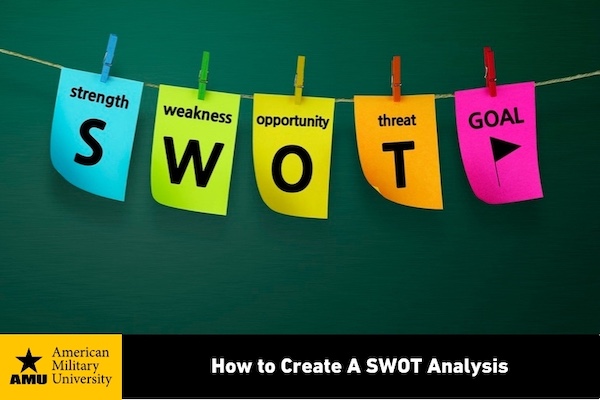
Because these factors may undermine strategic decisions, companies need a comprehensive analysis to develop strategies and contingency plans and ensure future competitive advantages. These goals are commonly accomplished through a SWOT analysis. SWOT stands for Strength, Weaknesses, Opportunities and Threats.
The Pestle Analysis Team contends, “SWOT analysis is one of business analysis’ most important tools. Through looking at the Strengths, Weaknesses, Opportunities, and Threats of a company, it can be quite easy to gain an extensive outlook on their strategy, and how well it’s bound to work. The problem that most run into when conducting a SWOT analysis, however, is deciding what factors fall into which categories.”
Robert Iger, former CEO of Walt Disney®, reinforces this way of thinking. He notes, “If leaders don’t articulate their priorities clearly, then the people around them don’t know what their own priorities should be. Time and energy and capital get wasted.”
Strategic planning aligned with core vision, mission, and goals, as well as tactical and operational efforts, is necessary for companies to avoid wasting resources and maintain a competitive edge. More importantly, no plan is useful unless it is grounded in sufficient analysis. Creating an effective SWOT analysis is central to strategic planning to help an organization meet its established mission, vision, and goals.
History of The SWOT Analysis
A SWOT analysis is a framework many companies have used to assess their capabilities and market conditions since its emergence between the 1950s and 1960s.
The SWOT framework evolved from research conducted at the Stanford Research Institute (SRI), which focused on corporate planning. According to scholars Richard W. Puyt, Finn Birger Lie, and Celeste P.M. Wilderom, a SWOT analysis “can still be used in its original (partly digitalized) form, and that it can benefit the quality of corporate/organizational strategizing today.”
Companies must innovate to remain relevant and marketable. However, innovation is more promising and rewarding when there is a greater understanding of the risks and opportunities associated with the innovation.
What makes a SWOT analysis important is that a SWOT analysis covers various areas and lets companies understand the factors critical to successfully marketing innovative goods, services, or ideas. They can:
- Examine market trends
- See consumer preferences and behaviors
- Understand threats in key areas
Creating A SWOT Analysis to Understand Internal and External Factors
A SWOT analysis is also known as an internal-external analysis, as it helps to evaluate internal and external factors. Using a diverse team of industry experts, a company creating its own SWOT analysis enables decision makers to review each of the four elements of the SWOT analysis in detail. As a result, the SWOT analysis aids these decision makers in creating proactive strategies for any planning process.
Internal Factors That Affect A SWOT Analysis
When creating a SWOT analysis, it is important to understand the internal factors (strengths and weaknesses) associated with the decision-making or planning process. More specifically, internal factors are the competitive resources and capabilities within a company that enable it to flourish in a competitive industry.
Strengths in A SWOT Analysis
To analyze its strengths, a company can use industry-based techniques to better measure performance and identify what sets it apart from other competitors. Additionally, these techniques may further indicate an organization’s strengths:
- Benchmarks
- Customer Satisfaction Score (CSAT)
- Net Promoter Score (NPS)
Moreover, identifying key strengths will give decision-makers a sense of the business’s unique and distinctive attributes. These company strengths could include:
- Effective leadership and followership
- Strong financials
- Excellent customer base and satisfaction
- Proprietary technology and data
- Recognizable brand, reputation, and market presence
- Resourceful personnel
- Operational efficiencies
For example, with advances in technology, some companies are using artificial intelligence (AI) to customize unique, proprietary approaches or apps. As a result, they can improve production, lower operating costs, and increase customer satisfaction.
During the process of conducting a SWOT analysis to examine a company’s strengths, Parabol recommends asking some of these questions:
- How effectively is the organization achieving its mission, goals, and strategic objectives?
- What aspects of the organization or business offer a competitive advantage?
- What are the notable accomplishments, successes, or achievements associated with the business or organization?
- How is the organization or business different from others in the industry or market?
- What factors give the organization or company a competitive advantage?
- What unique value does the organization or company bring to the industry?
- What internal capabilities, resources, assets, innovations, partnerships, or operational excellence contribute to the organization’s success?
With this knowledge of internal strengths, leaders and innovators can better assess the company or organization relative to others in the industry and focus on more advantageous areas to develop proactive strategies during strategic planning.
Weaknesses in A SWOT Analysis
Examining weaknesses within an organization is equally important when creating a SWOT analysis. Weaknesses are activities or insufficient resources that negatively affect the company.
- When creating a SWOT analysis, some examples of weaknesses to consider include:
- Poor leadership and followership
- Dated products, services, programs, or processes
- Limited resources
- Budget constraints and debt
- Human resource deficiencies
- Lackluster operational practices
For example, many organizations with limited resources are adopting AI to train employees and address weaknesses in management, production, operating costs, and customer satisfaction.
However, weaknesses within a company are not always evident. Sometimes what appears to be a weakness may be a symptom of a more critical underlying problem within the company.
To examine a company’s weaknesses, Parabol recommends obtaining answers to these questions:
- What areas can the company improve?
- What is the company doing poorly or inefficiently?
- What are the struggles within the company at the strategic, tactical, and operational levels?
- What are some key financial challenges?
- What are some key areas that negatively affect the company?
- What feedback from employees, stakeholders, investors, users, or customers is highlighting company weaknesses?
- Where are resources lacking within the company?
- What are the company’s weaknesses with respect to technology, competitive disadvantages, the brand, and market share?
Identifying weaknesses is critical in a SWOT analysis, as it compels a business to identify areas needing improvement. It forces a clear-eyed view of internal challenges with leadership, personnel, resources, limitations, and operations.
Long-term success is more likely when an organization embraces its weaknesses and addresses them with actionable strategies anchored in opportunities to heighten performance and minimize risk.
External Factors That Affect A SWOT Analysis
There are two key external factors associated with the SWOT framework. These external factors include opportunities and threats.
Opportunities in A SWOT Analysis
As a central component of SWOT analysis, opportunities focus on capitalizing on internal strengths, addressing weaknesses, overcoming external challenges, and creating contingency plans for potential threats. Opportunities foster potential organizational growth and help companies identify new goals and advantages to validate business strategies and sharpen their competitive edge.
These factors may present opportunities that can affect a company’s competitive position:
- Market trends
- Technology
- New markets
- Government policies
- Consumer trends
These external factors help businesses to identify opportunities, improve the use of strategic planning tools for analyzing consumer behavior, and prevent economic downturns. In addition, they can help sustain a business and position it for greater success.
To examine a company’s opportunities, Parabol recommends asking these questions:
- What emerging market trends, technologies, or industry changes can the organization leverage to its advantage?
- What other customers’ needs, market gaps, or niches could the organization address?
- What product, service, or process improvements could provide the greatest value, growth, and stakeholder satisfaction?
- What new market can the organization expand its products, services, or operations into?
- What are key regulatory, policy, economic, social, or demographic changes that could generate new opportunities?
- What are some ways the organization could leverage its brand, strengths, competitive advantages, or reputation for new opportunities?
- What strategic partnerships or alliances can help the organization expand its reach, influence, or impact?
- What strategies should the organization use to gain a comprehensive view of future endeavors and prospects?
Analyzing external opportunities such as new markets, emerging technologies, and beneficial government policies helps develop proactive strategies and strengthens a comprehensive SWOT analysis. Companies and organizations must remain vigilant, continue to innovate, and adjust based on opportunities.
Threats in A SWOT Analysis
Threats are on the horizon for any organization or company. External threats may undermine an organization’s growth, performance, reputation, and mission accomplishments.
Examples of potential threats include:
- Market shifts
- Increased competition
- Demographic changes
- Economic downturns
- Regulatory or political requirements
- Workforce pressures driven by concerns such as labor laws, costs, and shortages
- Environmental and global disruptions
- Technological advancements
Identifying external threats enables better responses to challenges and risks and supports strategic planning. Leaders should make key decisions and set policies, reinforce strategic planning, and pursue several funding streams. They should also improve operational efficiency and manage public relations and stakeholder perspectives.
For instance, competitors may improve production, lower operating costs, and increase customer satisfaction with advances in technology. As a result, it becomes more challenging for another organization to keep pace and compete in the marketplace.
To find potential threats, Parabol recommends asking these questions:
- What market trends, industry shifts, or external changes could impact an organization or business?
- What new competitors or emerging alternative solutions could reduce the market share or influence?
- What innovation, products, or services could limit or challenge competitive advantage?
- What laws, regulations, policies or compliance requirements could stagnate the organization or company?
- How might economic changes impact stability?
- What disruptive technologies could undermine the organization or company?
- What global influences might impact the organization or company?
However, there are potential threats outside a company’s or organization’s direct control. These threats include growing workforce demands, market shifts, and increased competition. Other threats include demographic changes, economic downturns, changes in government regulations, environmental and global disruptions, and new technologies.
To guard against challenges or risks associated with threats, all external threats should be used as a springboard for developing goals, strategies, and plans. Remember, the value of creating a SWOT analysis is to analyze what could disrupt a business and take action before it undermines its success.
A Comprehensive SWOT Analysis Supports Strategic Planning
A comprehensive SWOT analysis is a strategic planning tool used to determine effective strategies and develop a constructive view of an organization.
Leaders and decision makers may struggle to meet their organizational mission and goals if they do not determine their strengths and weaknesses before establishing strategic, operational, tactical, contingency, and “what if” plans. However, a complete examination of the strengths and weaknesses within a company sets the stage for conducting a robust SWOT analysis that addresses external environments and external challenges needed to apply keen strategic planning techniques.
However, avoid these common mistakes in strategic planning when using a SWOT analysis:
- Overlooking key strengths
- Using vague statements
- Downplaying areas of weaknesses
- Ignoring critical opportunities
- Dismissing external threats
- Using poorly crafted strategies to support identified goals
- Failing to translate a strategy into a practical plan with meaningful measurements
- Focusing on too many strategies at a time
- Misaligning resources with strategies
- Having a lack of leadership and stakeholder support
- Using insufficient knowledge, skills, and resources
- Failing to communicate strategies to everyone in the organization
- Failing to use performance measures to assess strategy success
- Monitoring of implemented strategies in a limited way
- Conducting just one instance of a SWOT analysis exercise
- Failing to remove bias during the analysis due to using subjective opinions
A comprehensive SWOT analysis template supports strategic planning by giving organizations a reliable template to assess existing strengths, examine key areas of weakness (not to be confused with threats), capitalize on opportunities, and manage and guard against potential threats.
Create a SWOT analysis to assess where your organization is today and use that analysis to make informed decisions and set expectations for a competitive tomorrow. However, remember to update the SWOT analysis regularly to address changing conditions in the future.
As my colleague Dr. Michael Marticek, Department Chair of Business and Real Estate, observes, “I feel that the SWOT analysis is vital to any business because success requires more than knowing where you want to go. It requires understanding your strengths, confronting your weaknesses, recognizing opportunities, and preparing for the threats that could stand in your way.”
The Master of Business Administration at AMU
For adult learners interested in business analysis, business administration, and similar topics, American Military University part of American Public University System (“AMU”) offers an online Master of Business Administration. For this MBA, students can choose various courses such as strategic management, fundamentals of business analysis, managerial economics, and corporate finance. Other courses include marketing management and legal and ethical issues in management.
This MBA also has multiple concentrations, so that students can choose the concentration courses best suited to their professional goals.
This degree program has also received specialty accreditation from the Accreditation Council of Business Schools and Programs (ACBSP). This accreditation ensures that this MBA has been carefully examined by higher education professionals to ensure its quality.
For more information, visit AMU’s business administration and management degree program page.
Walt Disney® is a registered trademark of Disney Enterprises, Inc.
Parabol® is a registered trademark of Parabol, Inc.
Dr. Novadean Watson-Williams is currently the Department Chair for the Computer and Information Technology Programs at American Military University part of American Public University System. She serves an aggressively growing department and has over 21 years of experience in the information technology field. Dr. Watson-Williams holds an A.A. in computer studies and a B.S. in information systems management from the University of Maryland University College, a B.S. in social science education from the University of South Florida, an M.A. in general counseling from Louisiana Tech University, and a D.B.A. in information systems from Argosy University.
Previously, she published several articles, entitled “What Can You Do with an Information Technology Degree?,” “What Is Information Technology? Each Generation’s Thoughts,” “Countering Cybersecurity Attacks through Accountability,” “Creating a Personal Brand through Using the Internet,” “Leadership Using Effective Nonverbal Communication,” and “Inspiring Self-Improvement through Technology Education, Collective Intelligence and Soft Skills.” She has also co-published several other articles, including “RFID with Real Implications,” “Artificial Intelligence in Information Security,” and “Evolution of Information Security.”